Method
-
What your starter actually is
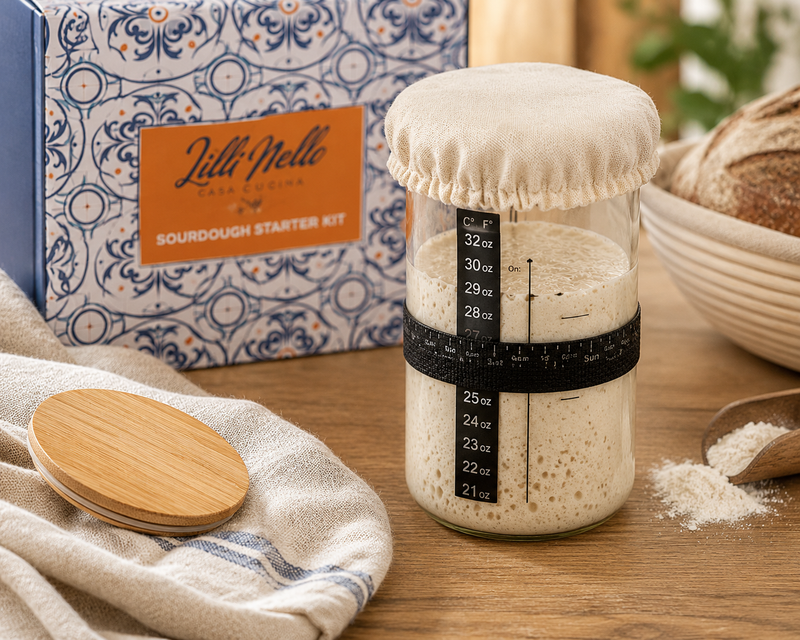
A sourdough starter is a living culture of wild yeasts and bacteria, kept alive by regular feeding. The yeast produces CO₂ (bubbles, rise) and the bacteria produce lactic and acetic acids (flavour, tang). You're farming something genuinely alive.
-
The basic feed ratio
Discard all but 50 g of starter. Add 50 g flour and 50 g room-temperature water. Stir vigorously until smooth — you want to incorporate air. Cover loosely with the lid or a cloth and leave at room temperature.
-
How often to feed
At room temperature (18–22°C), feed every 24 hours. In a warm kitchen (24°C+), feed every 12 hours. In the fridge, once a week is enough — take it out, let it come to room temperature, feed it, and put it back once it's peaked.
-
Knowing when it's ready to bake with
A ready starter is domed at the top, doubled in size, and bubbly throughout. The float test: drop a spoonful into water — if it floats, the starter is active enough to leaven bread. If it sinks, feed it and try again in 4 hours.
-
Reading the signs
Liquid on top (hooch) means your starter is hungry — it's not dead. Pour it off or stir it back in and feed. Pink or orange streaks mean contamination — discard everything and start fresh. A healthy starter smells sour and yeasty, like ripe yoghurt or beer.
-
Going on holiday
Feed your starter with a slightly stiffer dough (equal parts flour and water by weight), put it in the fridge and leave it. A healthy starter survives 2–3 weeks without attention. When you're back, give it two consecutive feeds at room temperature and it will be active again within 24 hours.
Baker's Tip
The discard isn't waste. Use it in pancakes, waffles, flatbreads or crackers. It keeps in the fridge for weeks and adds a gentle tang to almost anything.