Method
-
When to shape
Bulk fermentation is done when the dough has grown 50–75% and feels airy and light when you gently shake the bowl. A finger dent should spring back slowly — not snap back (under-fermented) or stay put (over-fermented).
-
Pre-shape
Tip the dough onto an unfloured surface. Fold the top third down, the bottom third up, then roll gently into a rough ball. Leave uncovered for 20–30 minutes — this rest lets the gluten relax so the final shape is easier.
-
Final shape
Lightly flour the surface. Flip the dough so the smooth side is down. Fold the top third toward you, the sides in, and the bottom up and over. Flip it over so the seam is underneath, then cup your hands around the ball and drag it firmly toward you in a semicircle. Repeat 3–4 times until the surface is taut and smooth.
-
Into the banneton
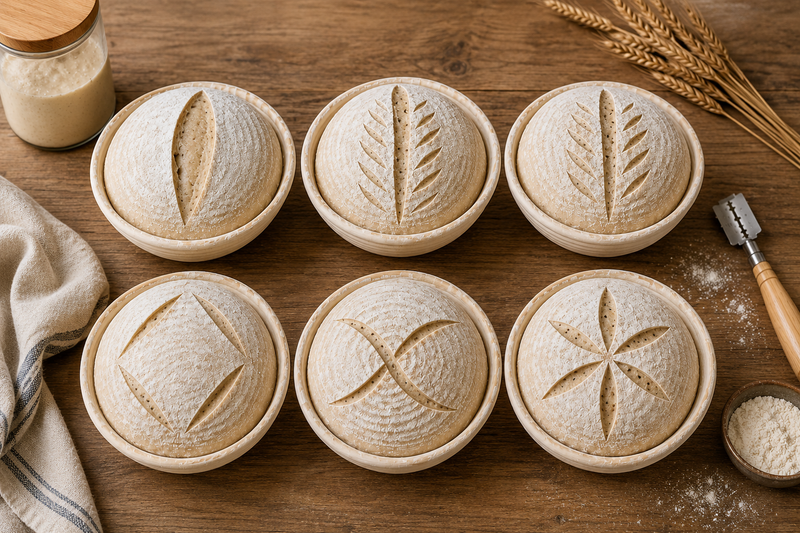
Flour the banneton generously — rice flour is ideal as it doesn't absorb. Place the dough seam-side up. The rattan rings will leave their pattern on the crust as it proofs.
-
Proof
For a same-day bake, cover and leave at room temperature 2–4 hours. For the best results, cover with a shower cap or cloth and refrigerate overnight — 8 to 16 hours. Cold proofing develops flavour and makes the dough easier to score cleanly.
-
Releasing the loaf
Place a square of baking paper over the banneton opening. Invert firmly and quickly — the loaf should release cleanly. If it sticks, your banneton needed more flour. Score immediately and load into the oven.
Baker's Tip
Work on an unfloured surface for shaping. The dough's slight stickiness against the bench is what lets you build tension. Flour prevents this.