Method
-
Morning feed (8 am)
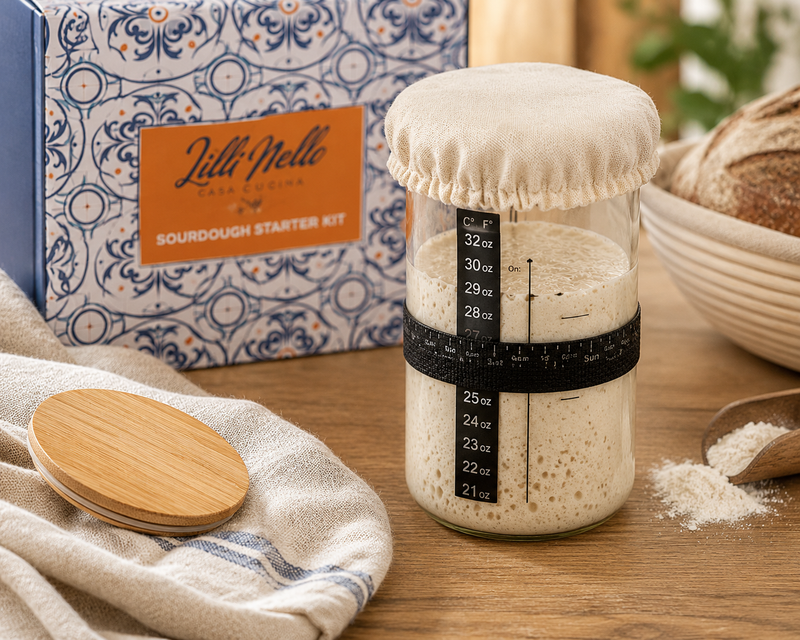
Discard all but 50 g of your starter. Add 50 g bread flour and 50 g room-temperature water. Stir well, cover loosely and leave at room temperature. In 4–8 hours it should double and smell gently sour.
-
Mix your dough (12 pm)
When the starter is domed and a spoonful floats in water, it's ready. Whisk 350 g water and the starter together, then add 450 g bread flour and 50 g wholewheat. Mix until no dry flour remains. Cover and rest 45 minutes.
-
Add salt & start folding (1 pm)
Dissolve 10 g salt in a small splash of water and work it into the dough. Over the next 2 hours, give the dough a stretch-and-fold every 30 minutes — four rounds total. Between rounds, cover and leave it alone.
-
Bulk ferment (3 pm – 6 pm)
Leave the dough covered at room temperature. It's ready when it has grown 50–75%, feels airy when you shake the bowl, and holds a slight dent when you poke it gently.
-
Shape & into the banneton (6 pm)
Turn the dough onto an unfloured surface. Fold the edges toward the centre, flip it over and use your hands to drag it toward you — building surface tension. Flour the banneton generously, place the dough seam-up, and cover.
-
Cold proof overnight
Put the banneton in the fridge. The slow cold proof develops flavour and makes the dough firmer and easier to score. Leave it 8–16 hours — you have a wide window.
-
Score & bake (next morning)
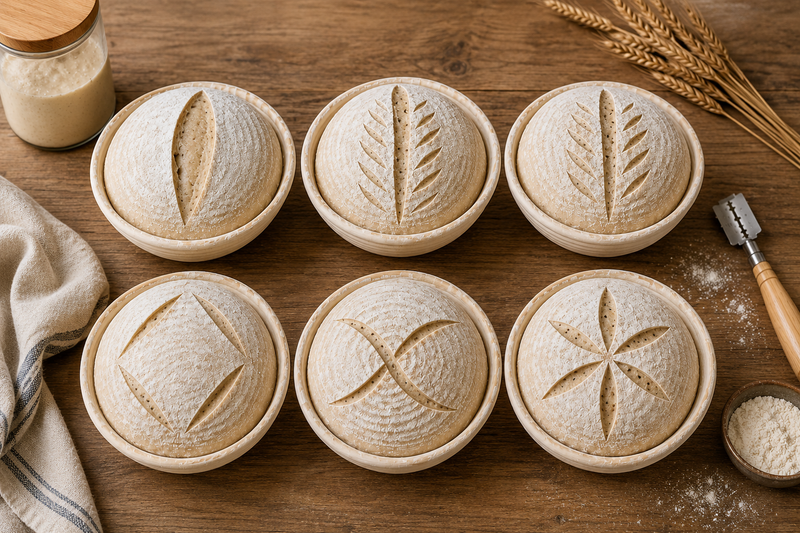
Preheat your oven to 240°C / 465°F with a Dutch oven inside for at least 45 minutes. Turn the dough onto a square of baking paper, score quickly with the lame at a 30° angle, lower into the pot and bake covered 20 min, uncovered 20–25 min until deep golden.
-
Cool completely
Transfer to a wire rack and wait at least one hour. Tap the base; it should sound hollow.
Baker's Tip
A stretch-and-fold is simple: wet your hand, grab one side of the dough, stretch it up and fold it over the top. Rotate the bowl 90° and repeat until you've done all four sides. That's one set.